THE WINNERS
OF THE OPEN INTERNATIONAL GRANT COMPETITION
OF CREATIVE PROJECTS IN THE VISUAL ARTS
ARTKOMMUNALKA 2026–2027
The winners in the nomination “Contemporary visual arts”:
Lyubov Kalashnikova, “The Wooden Collective”
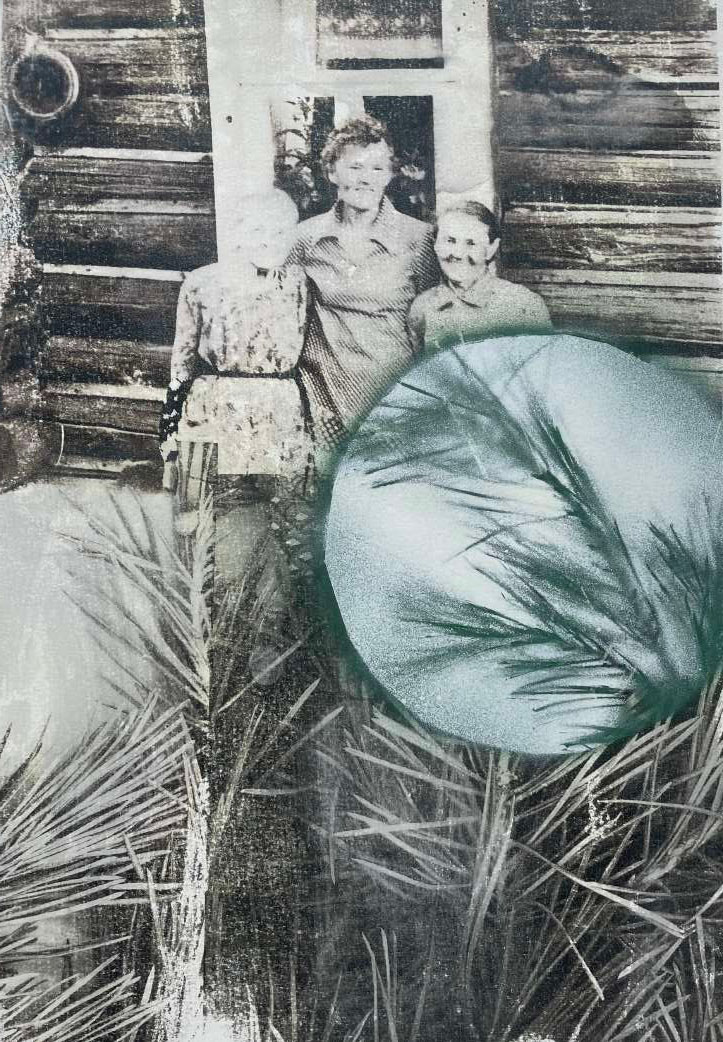
“The project assumes the study of preserved ancient wooden houses in Kolomna. The main idea implies the possibility of turning the wooden manor (built in 1815) of the Ananyins, a family of nobles, into a museum. The vital thing is preserving the façade and emptying the rooms to create the minimalist white cube concept, according to the philosophy of the Russian avant-garde. The project also assumes a research visit to an inhabited wooden residential building with conveniences. The purpose is to document the changes of the interior. Before this project, I would take a closer look at wooden surfaces of facades only. The project raises the question, what have we lost when we’ve abandoned the centuries-old tradition of coexisting with wooden surfaces?
This year’s competition theme has signaled for a change to me… Standardization, industrialization and now even digitalization made us forget intangible connections with the land, plants and their habitat. As said by D. Prigov, ‘The entire history of art is a history of violations’, and my violation is intertwined with my interest in the layers of time, in the layers that were unjustly forgotten or discarded.
The visual implementation of the project can manifest in several ways: a series of graphic works and/or an installation of paintings in the museum’s exhibition area.”
Damir Dzansolov, “In the Bossom of Jesus”
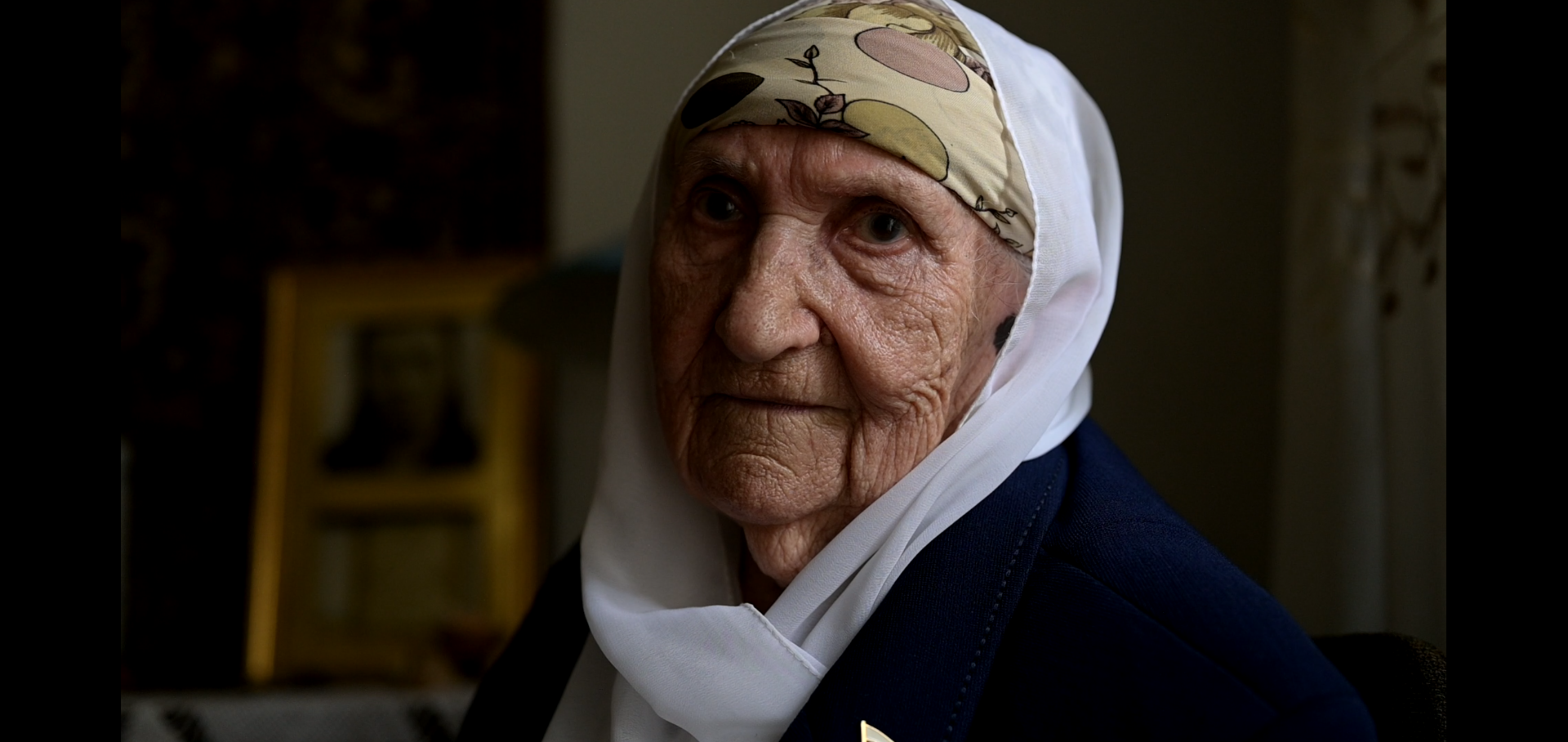
“The project assumes a graphic novel about the life of Saliha Idiyatovna Radjabova, a Muslim Tatar woman (hereinafter a respectful form of address, Khalisya-abi, will be used). Khalisya-abi was born in 1926 in Kolomna; she grew up in the Old Golutvin Epiphany Monastery. From 1920s to 1930s, the Bolsheviks, Russian Social Democratic Party, turned this Monastery into an employee accommodation for the Kolomna Locomotive Works. Khalisya-abi has left her memoirs, now she lives in Dushanbe, Tajikistan.
I will draw a graphic novel about Khalisya-abi’s childhood and youth, which took place in the Old Golutvin Epiphany Monastery before she went to the Great Patriotic War in 1941. According to the words of the heroine, Muslims (mostly Tatars residing in Kolomna) and Orthodox Christians (mostly Russians) lived in the Monastery, in harmony and equality that people nowadays lack so much.
Listening to the stories of this 99-year-old woman, I come across the distinctive features of her recollections. A graphic novel is the best form of conveying these memories — fragments of historical information combined with the Muslim’s non-linear perception of time.”
Alexandra Kochetkova, “From Generation to Generation”
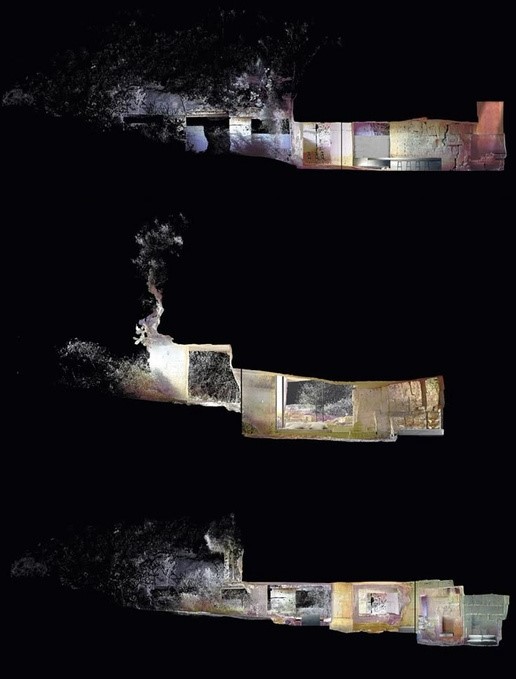
“I grew up in Kolomna. My grandparents worked at the Kolomna Locomotive Works. I grew up in the house where my mother grew up, and we visit this place with my family often; for me, this house is a querencia. This house and Kolomna are filled with memories and our family stories, those are my personal database. Long before the digital age, there has been these storage module and data transmission module, this special kind of “Family AI”, an invisible network of connections based on the lively interaction of generations.
During my stay at the museum residence, I plan to implement my project that aims to create a digital space of recollections. The project redefines the concepts of family, memory and passing down through generations in the era of digital realities and artificial intelligence.
My project involves collecting and analyzing documentary materials and retelling them using digital language. I will create a route that will exist in two shapes: a digital game and a physical path, with sculptural objects and an installation of images.”
Anastasia Zhegal, “Feast”
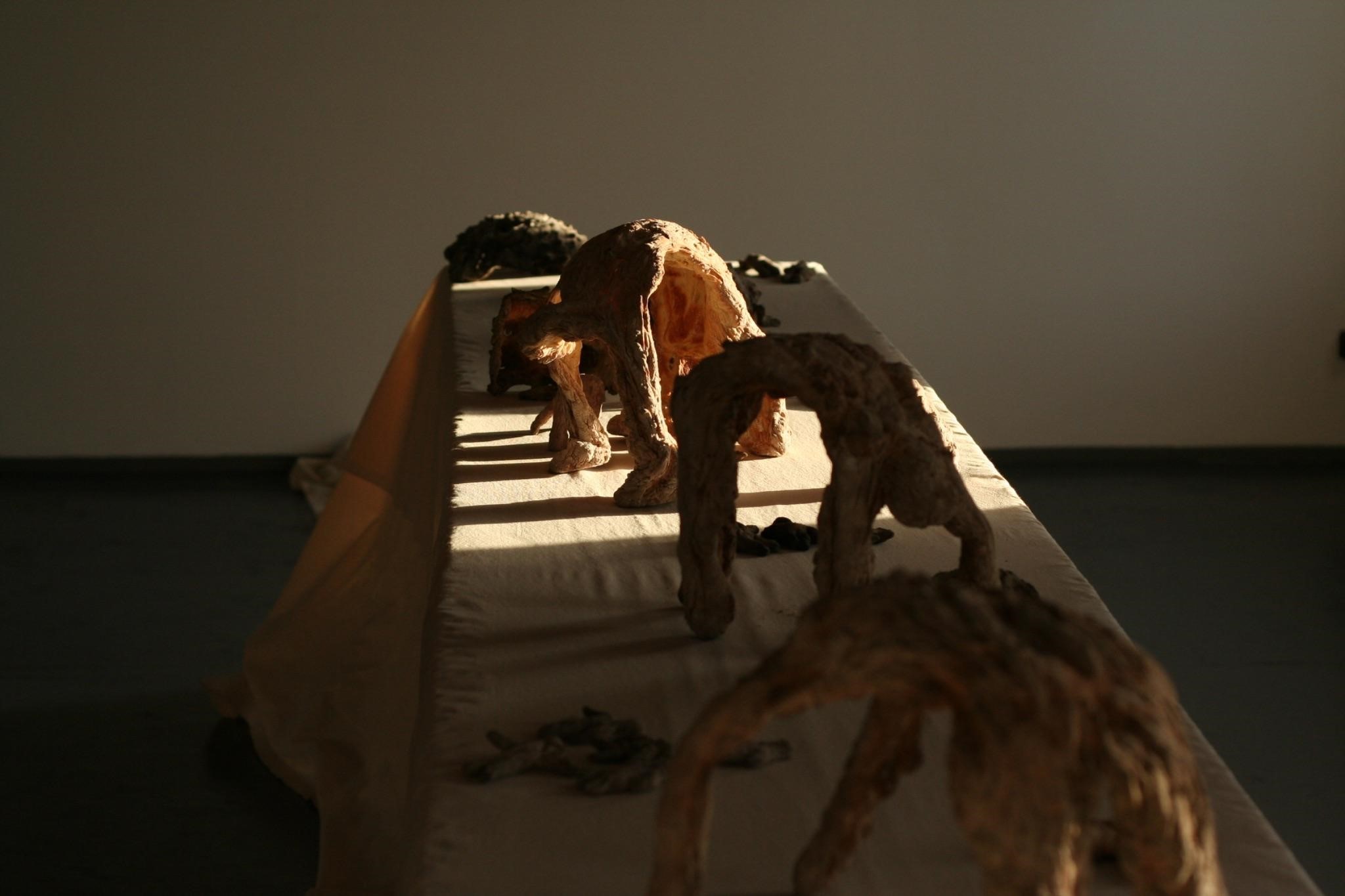
“What if we shift the role of a traveling artist and turn this outsider and guest into a temporary, hospitable host? The focus is on the topic of commensalism and social consumption of food from the symbolic and biological perspectives.
During my stay in Artkommunalka, I plan to have joint meals with local residents.
I will build a foundation for interaction, peculiar visual and nutritional highlights, for example, the choice of main course, timing, table setting, sculptures or art pieces embedded in the setting.
After having these meetings and exploring Kolomna, I will create the final installation.”
Julia Staroverova, “The Path Has Been Re-routed”
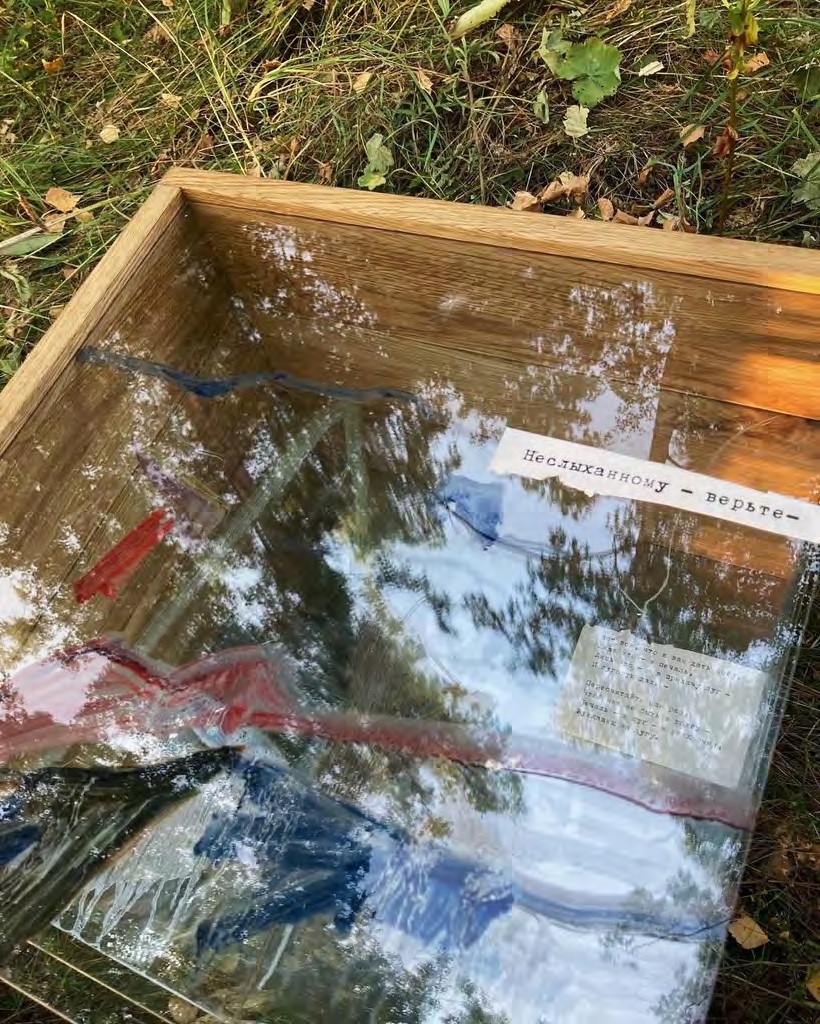
“The project assumes getting to know Kolomna through the stories of local residents and making my own map of the city. This map won’t accent the accuracy or social and historical significance of the cultural objects but it will accent the importance of connection with this place based on emotional experience.
During my stay at the museum residence, I will try different approaches in textile to convey transformation with the help of space and layers of images. I will also use bioplastic derived from the vegetation of the local landscape. The project also implies creating zine objects and cocoon style art pieces; I’d like these object to perform as houses of memories, showing everyone new sides and features when combined with stories.”
The winners in the nomination “Literature”:
Mila Nishatova, проект “375 Characters (With Spaces)”
“A series of public readings of deliberately deconstructed, perplexing texts and poetry of blank. When we face texts that are hard to follow, with many punctuation marks, we do not deny the logic of perception, we observe where this sincere attempt to make sense of an incoherent text leads, we observe this attempt to save the day and justify such texts through a poetic tradition where incoherency already has its legitimacy.
The project suggests exploring the boundaries of understanding and the way cultural activities (for example, reading groups) help interpret something fragmented, instead of leaving unclear. Such interpretation can be generalized and applied to one’s world view.
The second important aspect of the project is exploring interpretation as the stage machinery of violation, which turns a collection of information into a growing field of broken meanings.”
Ekaterina Zlatorunskaya, “Anonymous Phonographs Society”
“A phonograph factory has been operating in Kolomna since 1933. In 1941, this plant was closed and wasn’t running ever since. The phonograph museum was opened in 2017.
A phonograph is a silent witness of time, doomed to retell the same story with the same intonations. This is what the memory of the elderly is like. Variety of memoirs.
I would like to understand the time of the Kolomna phonographs and write their story not about the past, but about the present — a story through the voices of visitors and museum staff — how they live and what they see now. Project form: a stage play, the characters are people, time, phonographs.
I want to involve my co-author, a stage director, in this project. By the end of my stay at the museum residence, I would show a stage play with the participation of professional actors and residents of Kolomna.”
Vitaly Nuriev, Anne Coldefy-Faucard (Moscow — Paris), “Boris Pilnyak’s Early Works As a Stylistic Key to the Translation of the Novel ‘Roux le Bandit’ by André Chamson”
“This literary project aims to create an article reflecting the translation experience of finding stylistic intersections in Russian and French literature based on the example of the early works by a Soviet writer Boris Pilnyak. It is known that Boris Pilnyak spent one of his most fruitful periods in Kolomna from 1913 to 1924.
In 2024, Nouveaux Angles publishing house released a Russian translation of the novel ‘Roux the Bandit’ written in 1925 by a French writer Andre Shamson. Based on real events, the novel introduces the reader the setting of a mountain village in the south of France in the early 20th century. Anne Coldefy-Faucard is the editor-in-chief of the Nouveaux Angles publishing house and a famous French translator (her translations include I. Bunin, N. Gogol, F. Dostoevsky, B. Pilnyak, V. Sorokin and others). Anne Coldefy-Faucard had turned to Vitaly Nureyev, a Russian literary translator, with a request to edit the Russian translation of the novel. It had turned out to be an extensive work, which also involved the search of comparable stylistic patterns in Russian literature, such as Boris Pilnyak’s early short stories. Anne Coldefy-Faucard defended her dissertation ‘Boris Pilnyak and the Structure of Chaos’ at the Sorbonne University and translated a number of the writer’s stories into French, being a connoisseur of his works.
It is planned to invite Anne Coldefy-Faucard to Kolomna, and during her stay in Artkommunalka, Anne Coldefy-Faucard would translate B. Pilnyak’s short story ‘The Ice Drift’ (1924) to French, discussing with Vitaly Nureyev its documentary basis and clarifying those areas of the text that cannot be clearly interpreted. The French translation of ‘The Ice Drift’, the result of this stay in Kolomna, is planned to be published in the Artkommunalka catalog.”